 DailyTechPrices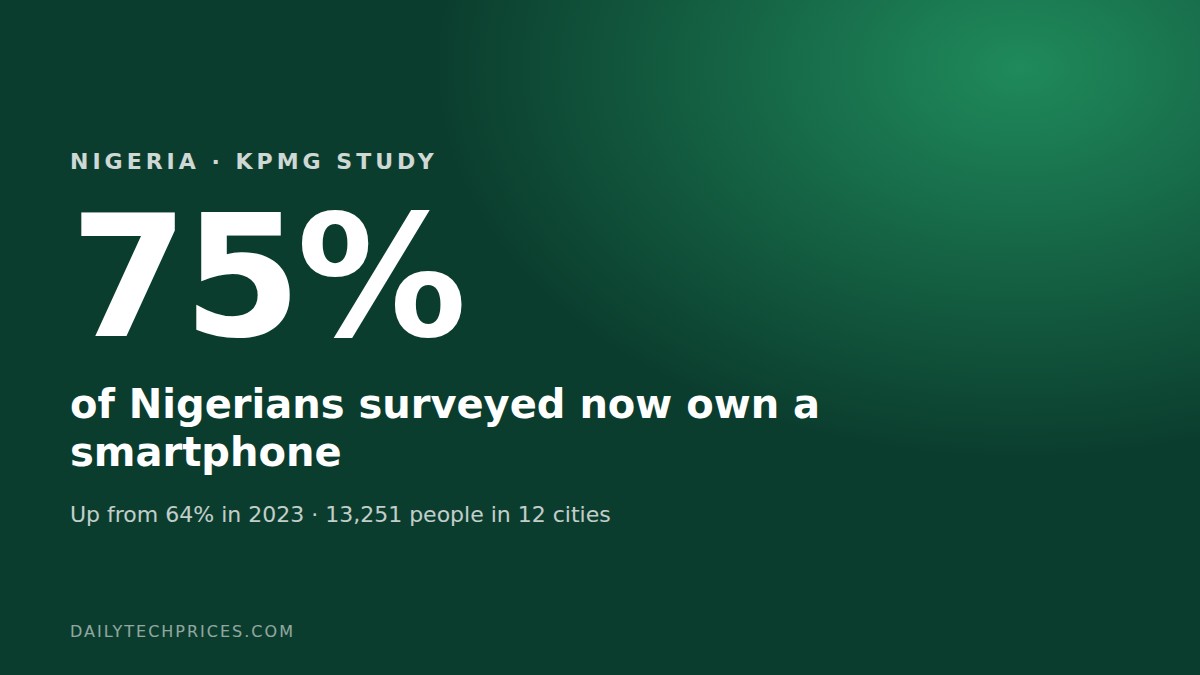
Three out of four Nigerians surveyed now own a smartphone. That’s the main finding of a new study from KPMG and Orange Group, and to be honest, it doesn’t come as a surprise. The report says Nigeria is quickly becoming a mobile-first economy, meaning more and more of our daily activity now happens on our phones.
The study, titled Nigeria Smartphone Study: A Nationwide Analysis of Smartphone Ownership and Digital Application Usage, surveyed 13,251 people in 12 major cities, including Lagos, Abuja, Kano, Port Harcourt, Ibadan and Onitsha. Researchers checked which apps were actually installed on each person’s phone instead of relying only on what people said.
According to the report, smartphone ownership rose to 75% in 2025, up from 64% in 2023. Over the same period, the share of feature phones (basic button phones) fell from 36% to 28%. Nearly all the smartphones run Android, and Tecno is the biggest brand, with Infinix and itel behind it.
Here are some of the key findings on which apps are installed:
- WhatsApp: on 95% of smartphones
- Facebook: 87%
- Xender: 77%
- TikTok: 70%
- OPay: 69%, the most installed fintech app
- PalmPay: 29%
- Audiomack: 45%; Boomplay: 40%
- Jumia: 15%; Jiji: 12%
- ChatGPT: 13%
The report credits the growth to Nigeria’s large, young population, better network coverage and phones becoming more affordable. It also points to barriers that remain: weak infrastructure, the cost of devices and data, low digital skills and cybersecurity worries.
Lawrence Amadi, Partner and Head of Technology, Media and Telecommunications at KPMG Africa, said the gap is still real. “More than a third of mobile subscribers were still on 2G as of May 2026, highlighting the continuing disparity in the depth and quality of digital access,” he said. 2G is the old network standard that handles calls and texts but gives very slow internet.
In a nutshell, the numbers explain why budget Android phones from Tecno, Infinix and itel keep selling so well: price is still the deciding factor for most people. Now, as more activity moves to phones, especially banking, the bigger question for many buyers is no longer whether to get a smartphone. It’s how to get one that’s fast enough, has enough storage and works on 4G, at a price they can afford.