 DailyTechPrices
Xiaomi 18 Pro Privacy Screen Explained: How It Works and Who It’s For
Oct 1, 2026 • Sam for DailyTechPrices • Phones
Ever caught the person next to you in a danfo or a banking hall staring at your phone while you type your PIN or read your chats? Xiaomi’s new 18 Pro and 18 Pro Max come with a screen designed to stop exactly that.
I’ve been a fan of Xiaomi’s Pro phones for a while now, mostly because they pack a lot of hardware for the price. But with the 18 Pro series, which launched in China in September 2026, the most interesting feature isn’t the cameras or the battery. It’s the screen, or should I say the screens, since both phones also have a second display on the back.
In today’s post, we’ll be looking at the Xiaomi 18 Pro series to explain what this privacy screen is and whether it’s something you actually need. Here’s what we’ll cover: what the privacy screen is, how it works, how you turn it on, how it compares to Samsung’s version, the rear screen, key specs, and price.
What Is the Privacy Screen?
In simple terms, Xiaomi calls it a Smart Privacy Display. When it’s on, anyone looking at your phone straight on sees everything normally, but anyone looking from the side sees a screen that’s almost black. According to Xiaomi, at angles beyond 60 degrees, the side brightness drops to roughly 1% of what you see from the front.
Now, this isn’t the same as a tinted privacy screen protector, which is always on and makes your screen dimmer all the time. Xiaomi’s version is built into the display itself, and you can switch it on and off whenever you want.
How It Works
This is the clever part. Xiaomi uses a display panel from TCL with what’s called a dual-pixel design. The screen has two sets of pixels mixed together in a one-to-one pattern:
- Standard pixels, which shine light in every direction, like a normal screen
- Privacy pixels, which have tiny physical barriers on their left and right sides, so their light only goes straight forward
When privacy mode is off, both sets of pixels light up together, and the screen looks like any other OLED display. When you turn privacy mode on, the standard pixels switch off completely, and only the narrow-angle privacy pixels stay lit. So the person in front of the phone (you) still sees the content, but the person beside you doesn’t.
Because this happens at the hardware level, it can’t be bypassed by a third-party app.
Xiaomi also says it has worked around the usual trade-off with this kind of screen. It uses what it calls SuperPixel 2.0, a full RGB layout (every pixel has its own red, green and blue parts) instead of the shared-subpixel layouts many OLED screens use. Android Authority reports this gives roughly 9.5 million subpixels, comparable to a traditional 2K panel. The screens also reach up to 4,000 nits of peak brightness, so they should still be easy to read outside under the Lagos sun.
How You Turn It On
This is where Xiaomi goes further than just an on/off button. You can turn on privacy mode in several ways:
- From Quick Settings, the AI key, or by voice command
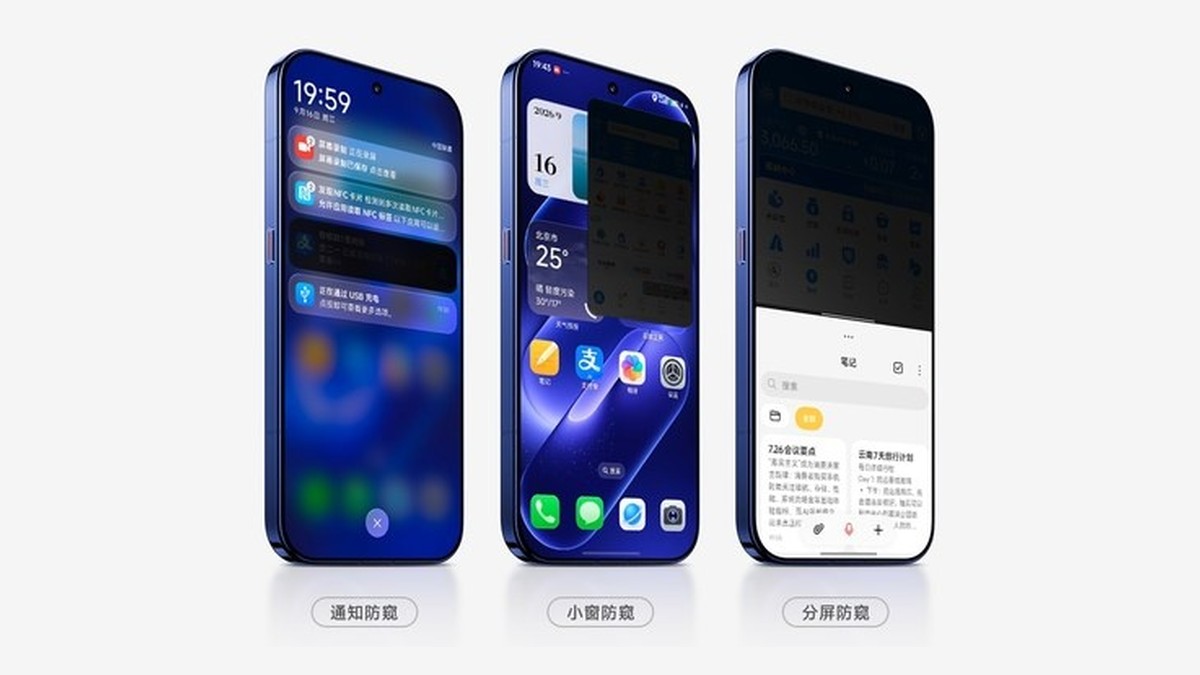
- Automatically for certain apps or pages, for example your banking app
- By location, so it stays off at home or in the office but turns on in public places like an airport
- Using the front camera, which can detect when someone is looking over your shoulder and suggest turning it on
On top of that, TechRadar reports that the privacy mode can be applied to just one app in split-screen mode, and to individual app notifications and pop-ups. So you could have a WhatsApp chat protected on one half of the screen while a YouTube video plays normally on the other half.
How It Compares to Samsung’s Version
Samsung was first to this idea with the Privacy Display on the Galaxy S26 Ultra, and Xiaomi’s version works in a very similar way. The main difference Xiaomi is pushing is screen quality. Android Authority notes that Samsung’s panel uses a Diamond Pentile layout (where pixels share some color subpixels), while Xiaomi uses a full RGB layout, which should look sharper. Xiaomi also offers more ways to trigger it automatically, including location and split-screen. Of course, I haven’t used both side by side, so I can’t tell you yet which one looks better in real life.
The Rear Screen
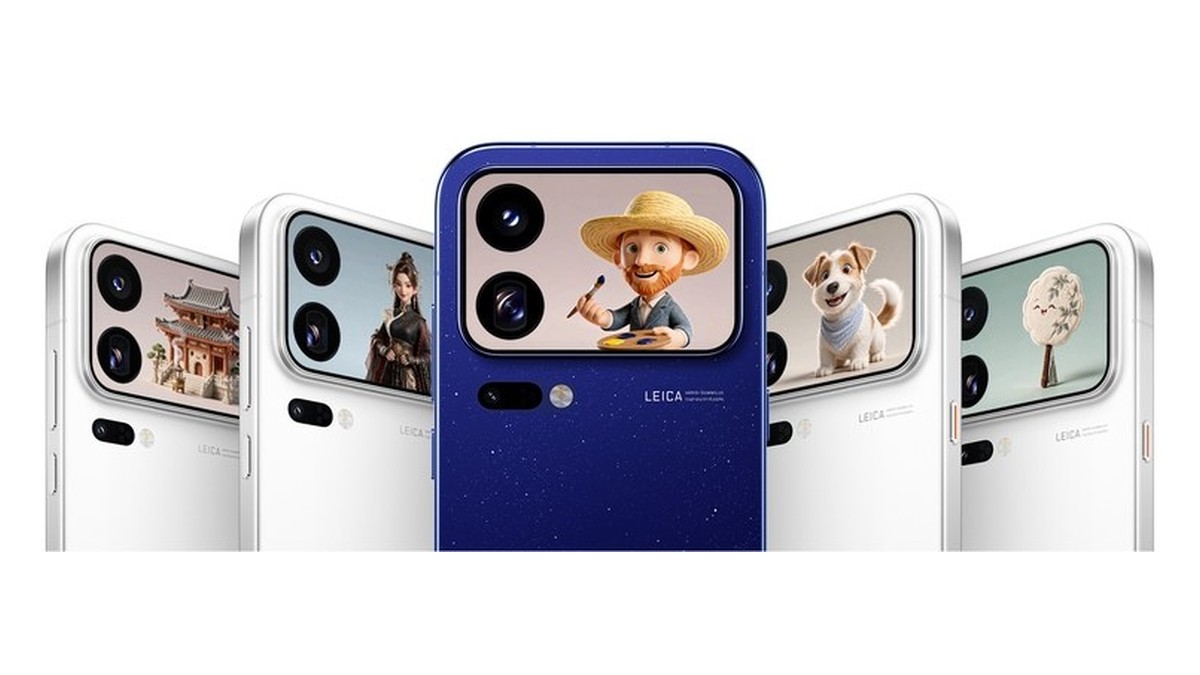
That aside, both phones also have a small second screen on the back, next to the cameras. The 18 Pro gets a 2.7-inch rear screen and the 18 Pro Max gets a 2.9-inch one, both OLED and both running at 120Hz.
You can use the rear screen for:
- Notifications, widgets and quick controls, with support for more than 100 app cards
- Media controls and timers
- Taking selfies with the main rear cameras, using the small screen as a viewfinder
- Wallpapers and pictures, if you just want it to look nice
Xiaomi has also added its AI assistant to the rear screen for things like reminders and timers. To be honest, the selfie use is the one I like most.
Key Specs
Both phones share the same camera setup:
- 200MP main camera with a 1/1.28-inch sensor, f/1.67 aperture and optical stabilization
- 200MP periscope telephoto camera with 3.2x optical zoom
- 50MP ultra-wide camera
- 50MP selfie camera
Here’s where they differ:
- The Xiaomi 18 Pro has a 6.4-inch AMOLED screen, the Snapdragon 8 Elite Gen 6 chip and a 7,000mAh battery
- The Xiaomi 18 Pro Max has a 6.9-inch AMOLED screen, the more powerful Snapdragon 8 Elite Extreme Gen 6 and an 8,500mAh battery
Both support 100W wired charging, as well as wireless charging, and come with up to 16GB of RAM and up to 1TB of storage. The Pro Max’s 8,500mAh battery is close to the Honor Magic 9 Pro Max’s 8,800mAh and bigger than the Oppo Find X10 Pro Max’s 8,000mAh, so battery life shouldn’t be a worry with this one.
Pros and cons
Pros
- Privacy screen built into the display, not a stick-on protector
- Many ways to turn it on automatically, including per app, by location and in split-screen
- Useful rear screen for rear-camera selfies and quick controls
- Two 200MP cameras on both models
- Big 7,000mAh and 8,500mAh batteries
Cons
- China-only for now, with no global date yet
- Chinese units will ship with Chinese software
- No official Nigerian price
- Privacy mode only works on the front screen, so it won’t help if someone is standing directly behind you
Price
In China, the Xiaomi 18 Pro starts at 5,999 yuan (about $900, or around ₦1,247,000) and goes up to 9,999 yuan (about $1,492, or around ₦2,066,000). The 18 Pro Max starts at 6,999 yuan (about $1,045, or around ₦1,447,000) and tops out at 10,999 yuan (about $1,641, or around ₦2,273,000) for the 16GB + 1TB model, which also comes in a transparent red Special Edition.
Xiaomi has said the Pro models will launch outside China this time, but it hasn’t given a date, a list of countries or global prices. Xiaomi phones are widely sold in Nigeria, but there’s no official Nigerian launch for the 18 Pro series yet. If you buy an imported unit from Computer Village or online, expect to pay more than the China price.
Finally, should you get the Xiaomi 18 Pro or 18 Pro Max for the privacy screen? Here’s my verdict.
If you do a lot of banking, business chats or work emails in public, whether that’s in traffic, at the bank or in a busy office, the privacy screen is a genuinely useful feature, and the fact that you can switch it on automatically makes it even better. The 18 Pro is the pick if you want a smaller phone, while the Pro Max is for anyone who wants the bigger screen, stronger chip and bigger battery.
On the other hand, if privacy isn’t really a concern for you, the privacy screen alone isn’t a reason to import a China-only phone. Either way, I’d wait for the global version, so you get Google services and a proper warranty.