 DailyTechPrices
Redmi Note 17 Series Price in Nigeria: Which Model Should You Buy?
Sep 30, 2026 • Sam for DailyTechPrices • Phones
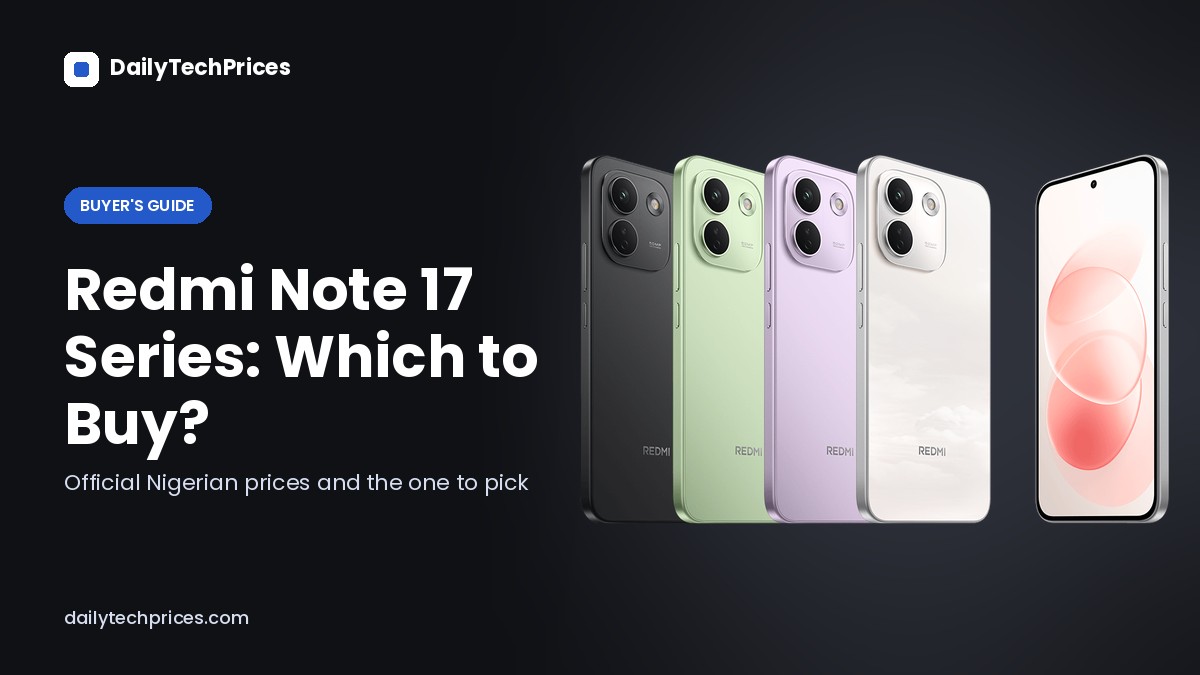
What if your phone could go through a full weekend of NEPA wahala without you begging anybody for a power bank? That’s exactly the pitch Xiaomi is making with the new REDMI Note 17 series, which it unveiled in Nigeria on September 30, 2026.
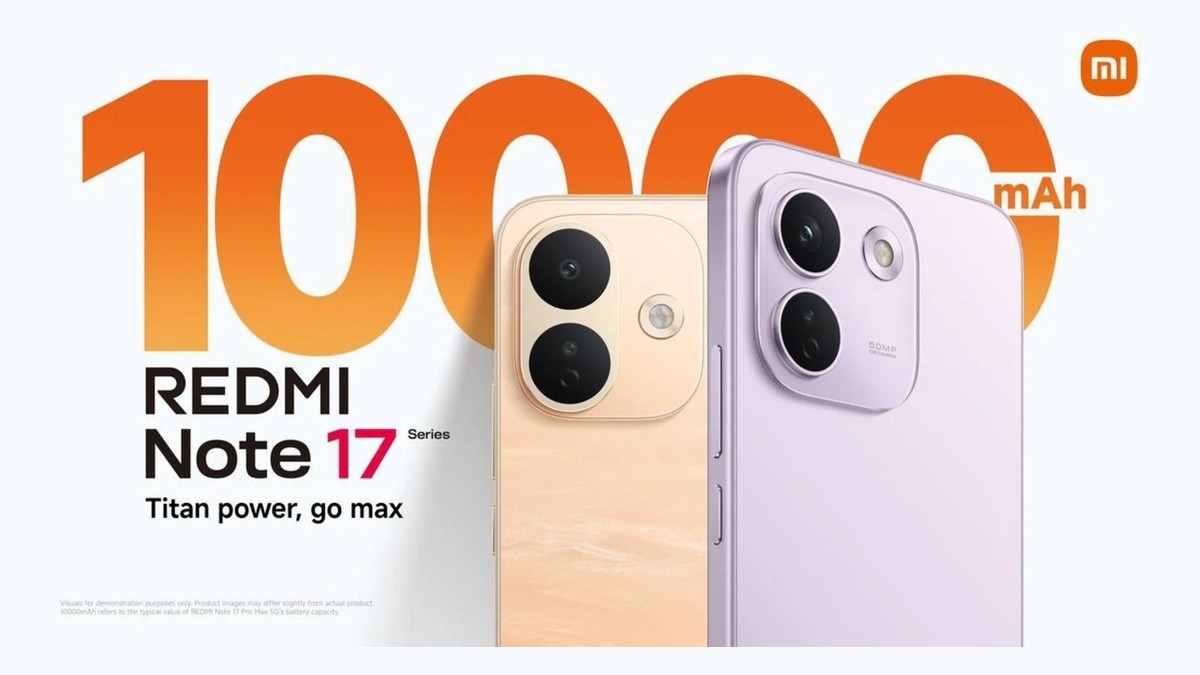
I’ve been a fan of the Redmi Note line for a long time now, and to be honest, it’s one of the few mid-range series that has always made sense for Nigerian buyers. This year, Xiaomi went bigger than ever. There are three phones in the lineup: the REDMI Note 17, the REDMI Note 17 Pro 5G and, for the first time, a REDMI Note 17 Pro Max 5G with a 10,000mAh battery. Xiaomi and local outlets like Technext say it’s the first phone officially sold in Nigeria with a battery that big.
In today’s post, we’ll be looking at all three REDMI Note 17 models to see which one actually deserves your money. Here’s what we’ll cover: the lineup at a glance, design and durability, display, performance, battery life, cameras, software, and price in Nigeria.
The Lineup at a Glance
First off, here’s a quick rundown before we go into the details:
- REDMI Note 17: 6.99-inch AMOLED, Snapdragon 6s 4G Gen 2, 7,700mAh battery, 45W charging, 4G only
- REDMI Note 17 Pro 5G: 6.83-inch 1.5K AMOLED, Snapdragon 6s Gen 4, 8,340mAh battery, 67W charging
- REDMI Note 17 Pro Max 5G: 6.83-inch 1.5K AMOLED, Snapdragon 6 Gen 5, 10,000mAh battery, 100W charging
One thing I want to point out early: only the Pro Max has the 10,000mAh battery. A lot of the headlines make it sound like the whole series has it, but the Note 17 and Note 17 Pro come with 7,700mAh and 8,340mAh cells. Of course, those are still big numbers, but it’s worth knowing before you walk into a shop.
Design and Durability
The Pro and Pro Max are where Xiaomi pushed durability hard. Both carry IP66, IP68, IP69 and IP69K ratings (IP ratings tell you how well a phone resists dust and water, and IP69K means it can handle high-pressure, high-temperature water jets). Xiaomi also says both are SGS-certified to survive 3-meter drops onto granite, and that they can sit in 2 meters of fresh water for up to 72 hours. Both use Corning Gorilla Glass Victus 2 on the front.
The standard Note 17, on the other hand, gets IP65, which is fine for rain and splashes but not something I’d take swimming.
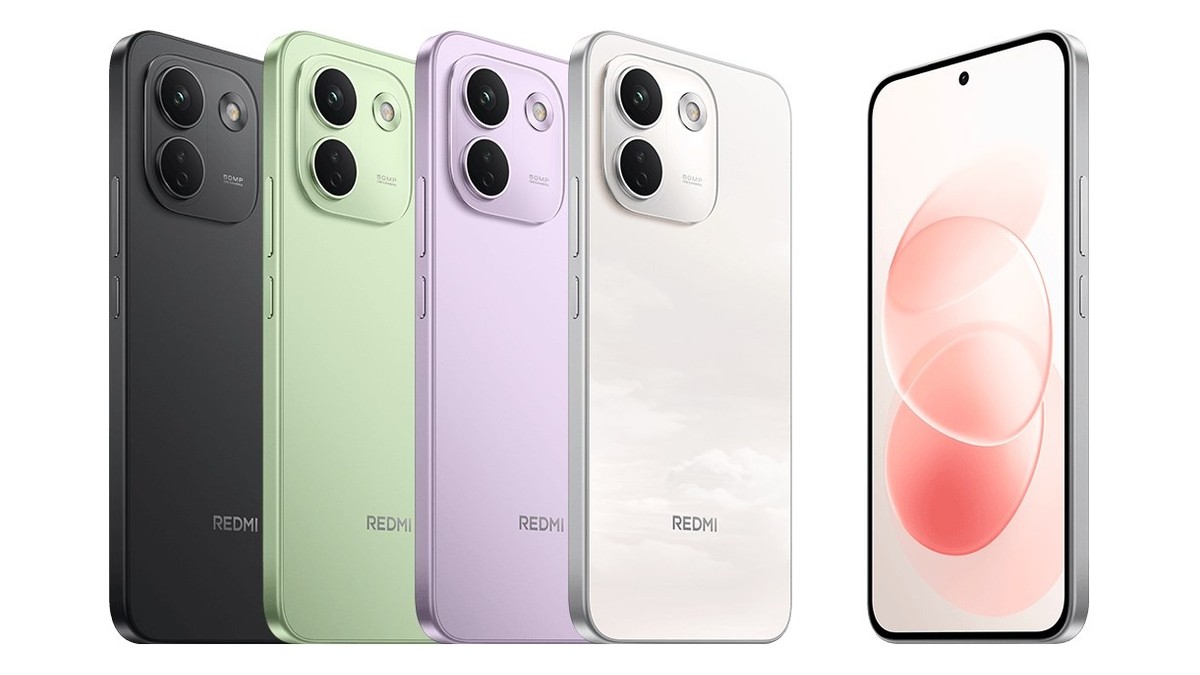
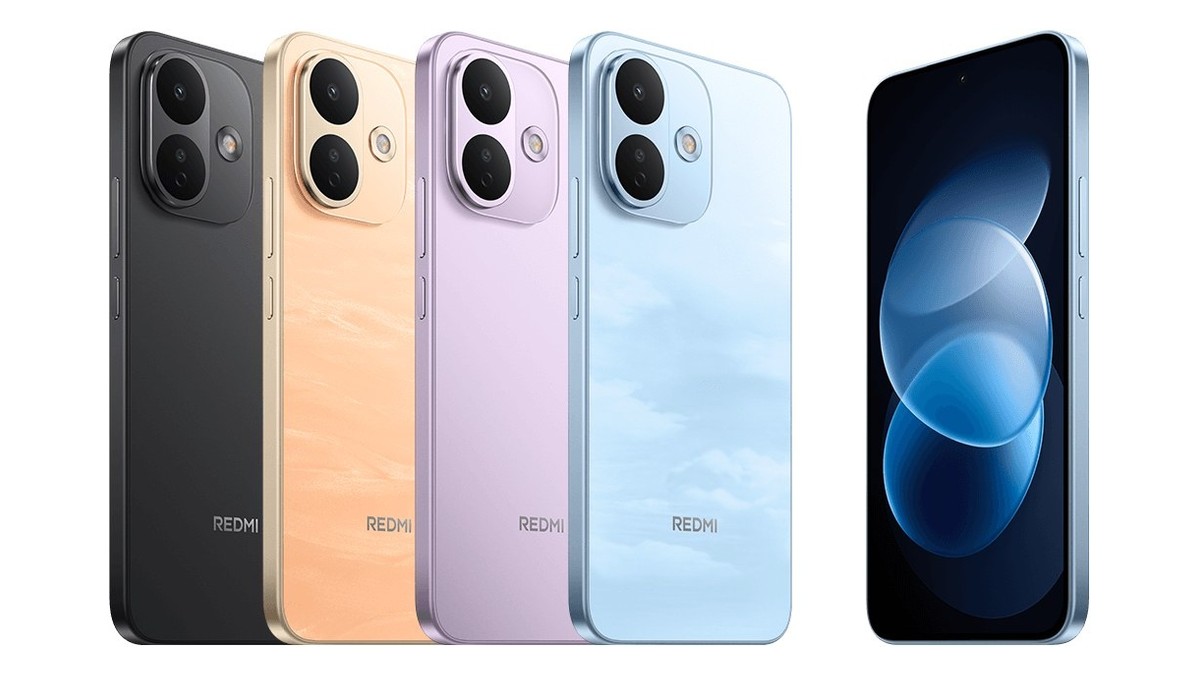
That aside, none of these phones is light. The Pro Max weighs 229.5g and is 8.65mm thick, the Pro weighs 223g at 8.6mm, and the Note 17 comes in at 224g and 8.45mm. That’s the price of these big batteries. In Nigeria, the Pro Max comes in Cloud Blush, Green, Purple and Black, the Pro in Sky Blue, Satin Orange, Purple and Black, and the Note 17 in Celestial Purple, Sky Teal and Black.
Display
The Pro and Pro Max share the same 6.83-inch 1.5K AMOLED screen with a 120Hz refresh rate and up to 3,500 nits of peak brightness (nits measure how bright a screen can get, and 3,500 is very bright for this price). If you spend a lot of time outside, say in Lagos traffic with the sun hitting your windscreen, that brightness will matter.
The Note 17 goes the other way with a bigger 6.99-inch AMOLED, but at Full HD+ (2396 x 1080) and 1,800 nits peak. It’s still a good screen, just not as sharp or as bright as the Pro models.
Performance
This is where the three phones really separate. The Pro Max runs the Snapdragon 6 Gen 5, a 4nm chip and the newest of the three. The Pro uses the Snapdragon 6s Gen 4, also on 4nm. Both are 5G phones.
The standard Note 17 uses the Snapdragon 6s 4G Gen 2, and as the name suggests, it’s 4G only. Now, 5G coverage in Nigeria is still limited to parts of big cities, so 4G alone isn’t a deal-breaker for many people. Either way, if you plan to keep your phone for four or five years, I’d lean towards one of the 5G models.
In Nigeria, both Pro models come with 8GB of RAM and a choice of 256GB or 512GB, while the Note 17 comes in 6GB/128GB and 8GB/256GB.
Battery Life and Charging
This is the whole point of the series. The Pro Max packs a 10,000mAh silicon-carbon battery (a newer battery type that squeezes more capacity into the same space) with 100W HyperCharge and 27W reverse charging, which means you can use it to charge another phone or your earbuds. Xiaomi claims up to four days of use on a single charge in its own testing, and up to 40 hours of video playback. Xiaomi also says the battery keeps at least 80% of its capacity after 1,600 charge cycles.
One small note: Xiaomi’s own material mentions a 9,210mAh version of the Pro Max in select markets. The Nigerian launch is being marketed with the 10,000mAh battery, but I’d still check the box before paying.
The Note 17 Pro gets 8,340mAh with 67W charging and 22.5W reverse charging, and Xiaomi says it will go beyond two days. The Note 17 has a 7,700mAh battery with 45W charging and 22.5W reverse charging.
To be honest, even the “smallest” battery here is bigger than what most flagships carry. For context, Xiaomi’s own Redmi 17, which is already on Jumia Nigeria from around ₦205,000, has 7,500mAh, so the Note 17 beats that and adds an AMOLED screen.
Cameras
The Pro Max gets the best setup: a 50MP main camera with OIS (optical image stabilization, which reduces blur from shaky hands) and a bright f/1.5 aperture, an 8MP ultrawide and a 32MP selfie camera. The Nigerian launch material also mentions 4K video at 30fps.
The Note 17 Pro also has a 50MP main camera with OIS and an 8MP ultrawide, but with a 16MP selfie camera. The Note 17 has a single 50MP main camera and a 16MP selfie camera, with no ultrawide.
Software and Updates
All three phones run Xiaomi HyperOS 3, based on Android 16. Xiaomi promises six years of security updates across the series. For OS upgrades, Nigerian launch coverage says the Pro Max gets four major Android updates. That’s a long time for a mid-ranger, and it lines up nicely with the long battery life story.
Pros and cons
Pros
- The Pro Max’s 10,000mAh battery is the biggest you can buy officially in Nigeria right now
- Pro and Pro Max have IP69K protection and 3-meter drop certification
- Bright 1.5K AMOLED screens on the Pro models
- Six years of security updates across the series
- Official Nigerian prices, so you get local warranty
Cons
- All three phones are heavy, from 223g to 229.5g
- The standard Note 17 is 4G only
- The Note 17 has no ultrawide camera
- Only the Pro Max has the 10,000mAh battery the series is being marketed around
Price in Nigeria
Xiaomi announced these official Nigerian prices at launch:
- REDMI Note 17 (6GB/128GB): ₦379,200
- REDMI Note 17 (8GB/256GB): ₦429,900
- REDMI Note 17 Pro 5G (8GB/256GB): ₦559,000
- REDMI Note 17 Pro 5G (8GB/512GB): ₦639,500
- REDMI Note 17 Pro Max 5G (8GB/256GB): ₦699,800
- REDMI Note 17 Pro Max 5G (8GB/512GB): ₦766,400
I’d buy from Xiaomi’s official stores or authorized retailers so you get the local warranty, rather than grabbing an imported unit in Computer Village that might be the 9,210mAh version.
Finally, which one should you get? Here’s my verdict.
If battery life is your number one concern, and in Nigeria it usually is, the REDMI Note 17 Pro Max at ₦699,800 is the one to get. It’s only about ₦140,800 more than the Pro, and for that you get a bigger battery, faster 100W charging, a newer chip and a better selfie camera. In a nutshell, that’s the best value in this lineup.
On the other hand, if ₦700,000 is too much, the Note 17 Pro still gives you the same tough build and the same bright screen with over 8,000mAh. I’d only go for the standard Note 17 if your budget is strictly under ₦450,000 and you don’t mind sticking with 4G.