 DailyTechPrices
Huawei Watch D3: The Smartwatch With a Real Blood Pressure Cuff
Oct 2, 2026 • Sam for DailyTechPrices • Smartwatches
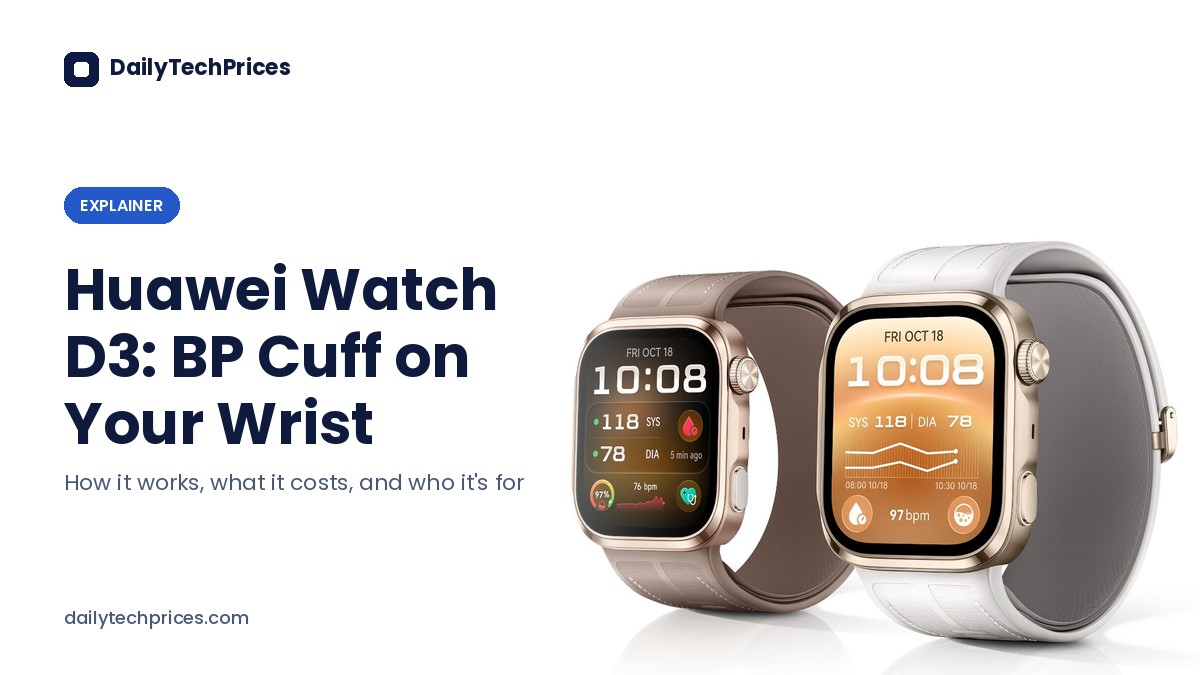
Can a smartwatch really measure your blood pressure the way a doctor’s cuff does? With the Watch D3, Huawei says yes, and unlike most watches that only estimate it, this one actually squeezes your wrist to take a reading.
I’ve been a fan of Huawei’s wearables for a while now, mostly because of their long battery life and clean designs, and the Watch D line has always been the odd one out in a good way. In today’s post, we’ll be looking at the Huawei Watch D3 to see how it works and who it’s for. Here’s what we’ll cover: how the blood pressure measurement works, what Huawei claims about accuracy, design and display, battery life, the new Watch GT 7 series, and price and availability in Nigeria.
Quick note: I haven’t tested the Watch D3 myself, so everything below is based on Huawei’s official information and reputable reviews. And of course, none of this is medical advice. A watch like this is not a replacement for a doctor.
How the Blood Pressure Measurement Works
First off, this is what makes the Watch D3 different. Most smartwatches that talk about blood pressure use optical sensors (the green lights under the watch) to estimate it from your pulse. The Watch D3 doesn’t rely on that.
Instead, Huawei built a small inflatable airbag into the strap, powered by a micro-pump. When you take a reading, the airbag inflates and presses against the artery in your wrist, just like the cuff your doctor wraps around your arm. A high-precision pressure sensor, paired with Huawei’s TruSense system, then reads the tiny pressure changes from your pulse. This is called the oscillometric method, and it’s the same basic principle used by regular upper-arm blood pressure monitors you can buy at a pharmacy.
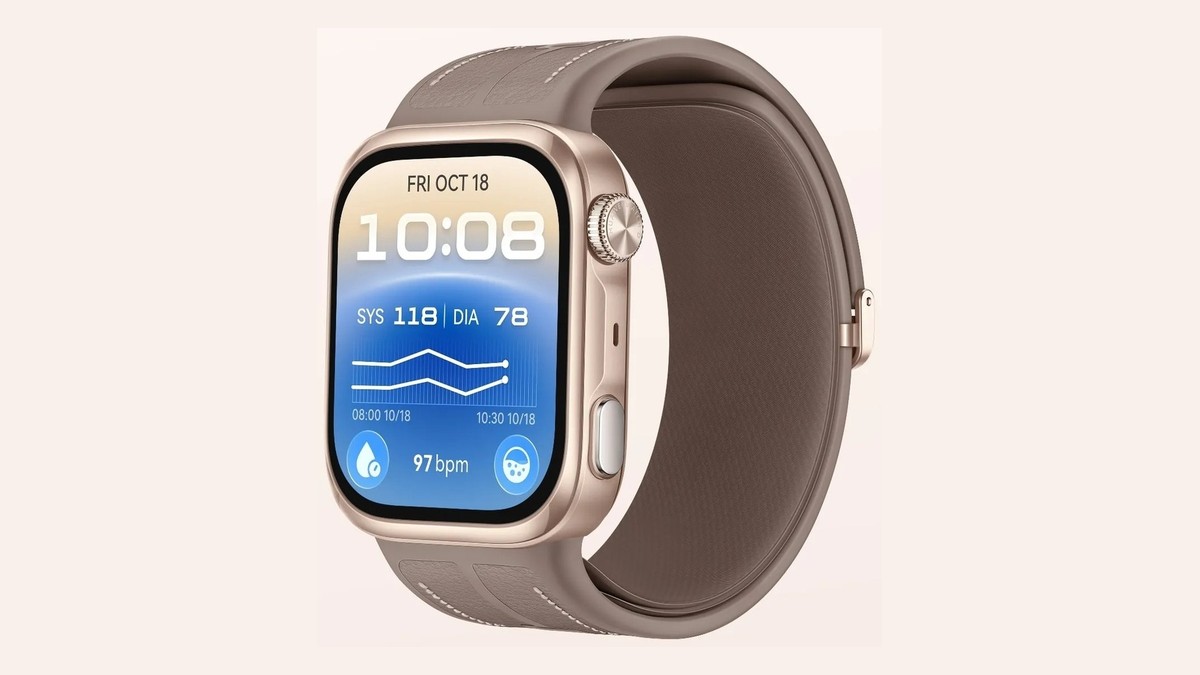
You get a few ways to use it:
- Quick, on-the-spot readings whenever you want
- Resting blood pressure mode
- Pre- and post-exercise blood pressure checks
- 24-hour ambulatory blood pressure monitoring (ABPM), where the watch automatically takes readings throughout the day and night and gives you a report with your average day, night and 24-hour numbers
Huawei says the 24-hour mode follows European Society of Hypertension guidelines for how often to take readings, and that night-time inflation is quieter so it doesn’t wake you up.
What Huawei Claims About Accuracy
Now, this is important. Huawei says the Watch D3 is CE-MDR certified as a medical device, which means it’s been approved under the European Union’s Medical Device Regulation. That’s a big deal, because most smartwatches can’t say that about their blood pressure features.
That aside, Huawei is also very clear about the limits. Its own page says readings are “for reference only” and “should not be used as a basis for medical diagnosis, or treatment.” It also says you should never adjust your medication based on the readings, and to always consult your doctor. Huawei notes that it’s not validated for pregnant people, newborns or emergency care, and that people with wrists smaller than 13cm or larger than 21cm may get less accurate readings.
According to the5krunner, Huawei doesn’t claim the D3 is more accurate than the Watch D2, since it uses the same micro-pump, airbag and pressure-sensor principle. In the5krunner’s own testing against an Omron arm cuff, the D3 tended to read lower than the arm cuff. In a nutshell, it’s best used to spot trends over time, and anything worrying should go to a doctor with a proper arm cuff.
Design and Display
This one is slimmer than the Watch D2. The case is 11.3mm thick, down from 13.3mm, and it measures 46.5 x 41mm. The airbag strap is also narrower at 25.5mm. The watch weighs about 40g without the strap.
You get a 1.92-inch AMOLED display with a 408 x 480 resolution, in Black, White and Mocha Gold in the UK. There’s also an ECG sensor (electrocardiogram, which records your heart’s electrical signals), along with the usual optical heart rate sensor, a temperature sensor, a barometer and more. The Health Glance feature checks up to 11 health indicators and gives you a report in about a minute.
It works with Android 8.0 or later and iOS 13.0 or later, over Bluetooth 6.0. The strap fits wrists from 130mm to 210mm, in M and L sizes.
Battery Life
Huawei says you get up to 6 days with typical use. If you turn on 24-hour blood pressure monitoring, that drops to about 1 day, which makes sense, since the pump is working all day. A full charge takes about 75 minutes.
To be honest, 6 days is good for a watch that does this much, although it’s nowhere near the 21 days Huawei claims for the Watch GT 7 under light use.
What About the Watch GT 7 Series?
Huawei launched the Watch D3 at the same event in Munich on September 2, 2026, alongside the Watch GT 7, Watch GT 7 Pro, Watch 6 and Watch 6 Pro.
The Watch GT 7 series doesn’t have the inflatable cuff, so it can’t take cuff-based blood pressure readings. What it does offer is up to 21 days of battery under light use, snow sports and cycling features, and Huawei’s Health Insights readiness score. The GT 7 comes in 46mm and 41mm sizes at £279.99 in the UK, while the GT 7 Pro, with a ceramic bezel and titanium frame, costs £379.99.
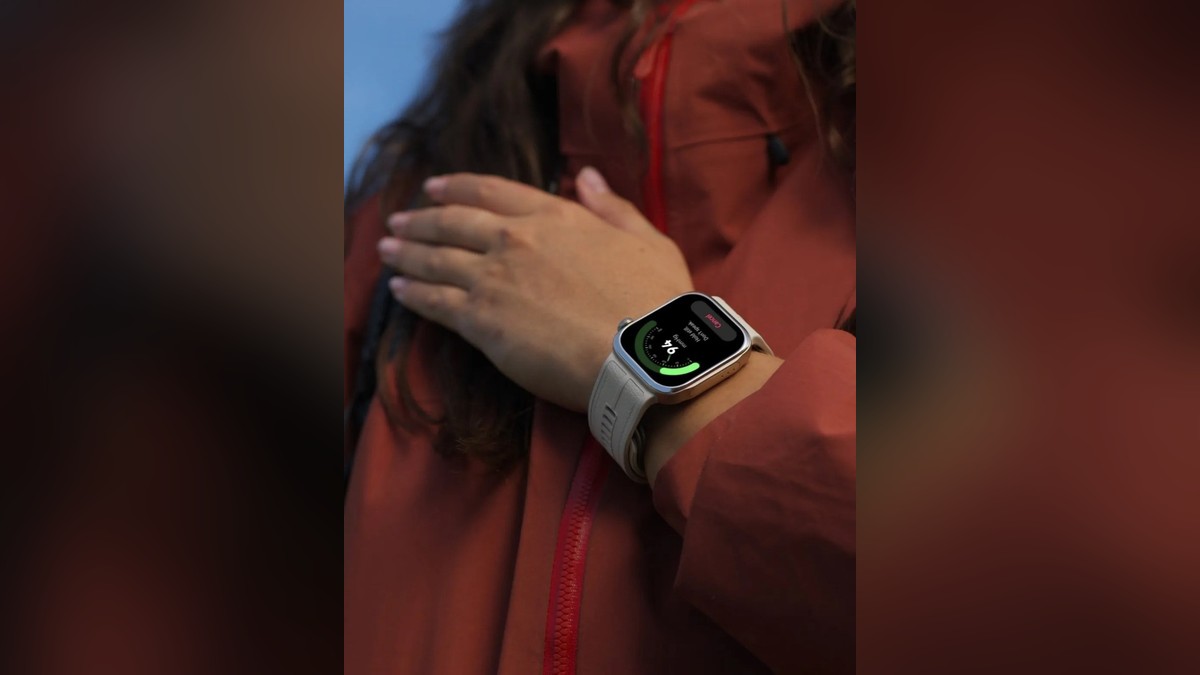
Either way, if blood pressure is your main reason for buying a watch, the D3 is the one to look at. If you mainly want fitness tracking and long battery life, the GT 7 is the better fit.
Pros and cons
Pros
- Real inflatable cuff instead of an optical estimate
- CE-MDR certified as a medical device in Europe
- 24-hour ambulatory blood pressure monitoring with reports
- Slimmer and lighter than the Watch D2
- ECG and a big 1.92-inch AMOLED screen
Cons
- Battery drops to about 1 day with 24-hour monitoring on
- Reviews suggest readings can come in lower than an arm cuff
- Only 6 days of typical battery, far behind the Watch GT 7
- Not officially listed in Nigeria yet, as far as I can tell
Price in Nigeria
The Huawei Watch D3 launched in the UK on September 23, 2026, at £399.99. At a rough rate of about $1.35 to the pound, that’s about $540, or around ₦748,000.
Huawei does have a presence in Nigeria. Its Nigerian website has a wearables section, and Huawei watches like the Watch Fit 4 are listed on Jumia. However, I couldn’t find the Watch D3 on Huawei’s Nigeria site or at a Nigerian retailer yet, so for now you’d likely need to import it or wait for a dealer to bring it in. If you do import, check that you’re getting the right strap size, since the cuff needs a proper fit to work.
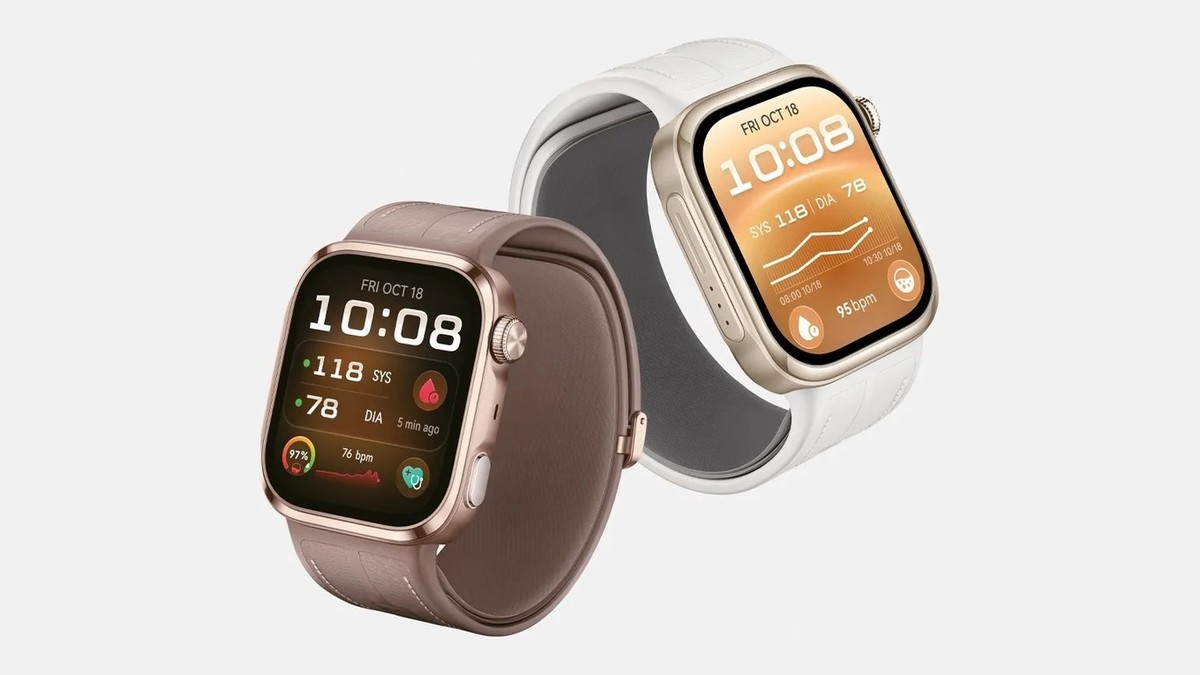
For comparison, the Watch GT 7 at £279.99 works out to around ₦524,000, and the GT 7 Pro at £379.99 is around ₦710,000, using the same rough exchange rate.
Finally, should you get the Huawei Watch D3? Here’s my verdict.
If you or someone in your family needs to keep an eye on blood pressure, and you’d rather not carry a separate cuff around, the Watch D3 is one of the most interesting smartwatches you can buy right now. I like that Huawei put a real cuff in it and backed it with medical certification in Europe.
Regardless, treat it as a way to spot trends, not as your doctor. Keep using a proper arm monitor for important readings, share the numbers with your doctor, and if you just want a great fitness watch with long battery life, go for the Watch GT 7 instead.